BRAMPTON, ON – Spring has sprung in the City of Brampton and coyote puppies and their families are making their annual appearance. From April to June, coyotes give birth and raise their pups by creating dens throughout the city. During this time, coyotes may become seen throughout the community more often than usual as coyotes search for food and protect their pups from other dangers.
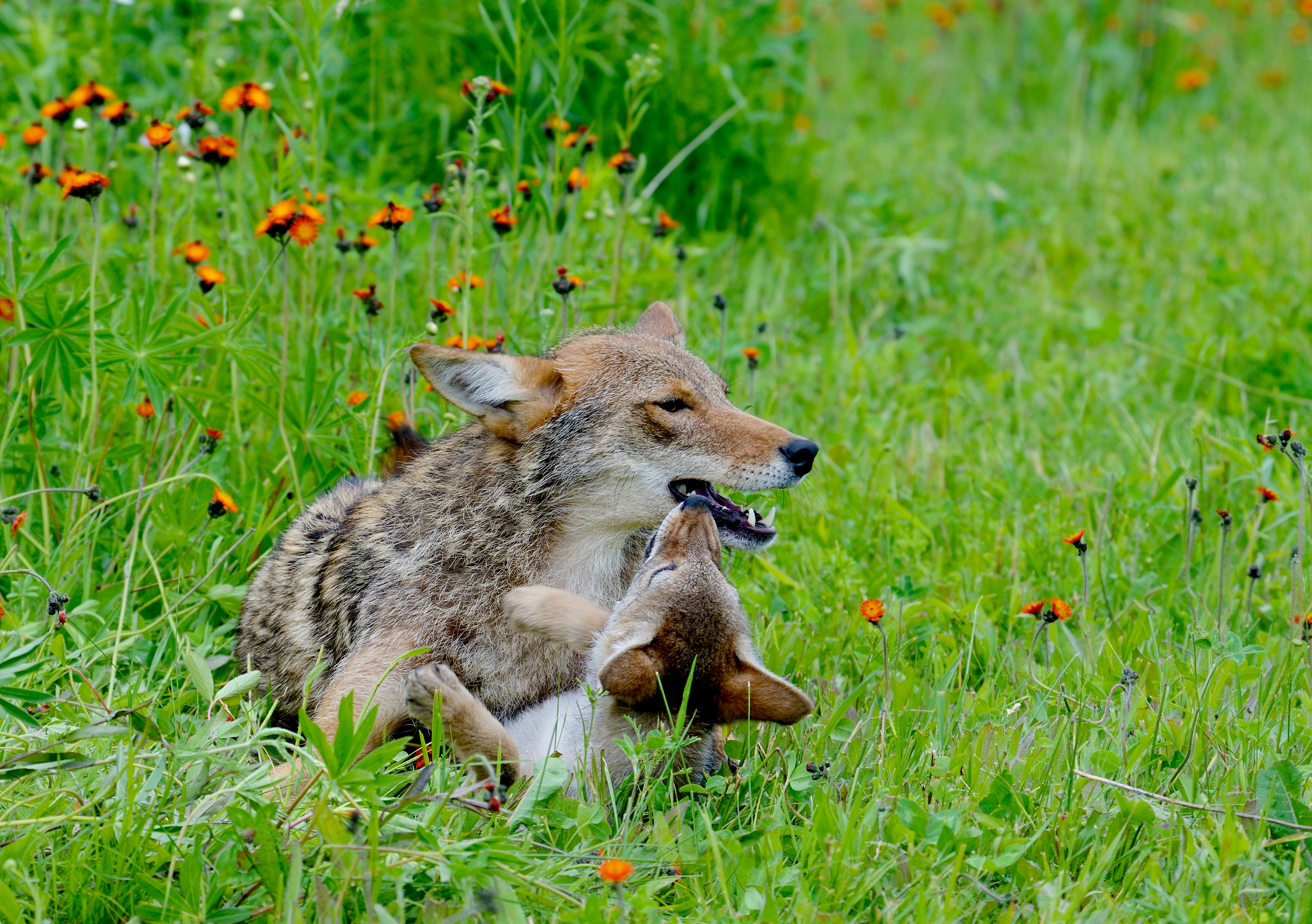 Adult Coyote and pup playing in grassy field. Credit: Shutterstock
While it is natural to feel concerned about seeing coyotes in neighbourhoods, it is important to remember that they are a part of urban wildlife. Brampton Animal Services is sharing simple safety tips and resources to empower residents to feel well-equipped to coexist peacefully with local wildlife.
Tips to stay safe during coyote pupping season
- Keep pets on a leash: When walking your dog, always keep them on a short leash, especially near naturalized areas, parks or along trails where coyotes are commonly seen. This helps reduce the risk of unexpected encounters.
- Secure all food sources: Never leave pet food, birdseed or garbage outdoors where it can attract coyotes or their prey. Store garbage in secure containers and clean up fallen fruit or food scraps.
- Supervise pets outdoors: When letting your pets outside, especially during dawn and dusk when coyotes are most active, always supervise them, even in fenced yards. Small dogs and cats can appear as prey to coyotes.
- Be "big and loud": If you encounter a coyote, do not run. Make yourself appear larger by raising your arms and making noise to scare the animal away. Coyotes will typically retreat when they feel threatened.
- Report unusual behaviour: If you see a coyote displaying aggressive or unusual behaviour, such as approaching people or acting sick, contact Brampton Animal Services immediately at 3-1-1 or 905.458.5800. If a coyote is presenting an immediate threat to public safety, call 9-1-1.
Steps to take if you encounter a coyote
- Stay calm: It might feel difficult, but if you are approached by a coyote, remain calm.
- Do not run away: Running away from a coyote may encourage them to follow you.
- Back away slowly: While keeping an eye on the coyote, slowly back away to increase the distance between you and the animal.
- Make yourself loud and large: If a coyote continues to approach you, make gestures and use objects to startle the coyote into running away – do not chase or touch the animal.
- Call 3-1-1: Report an occurrence with a coyote to 311 Service Brampton. In an emergency, call 9-1-1.
Feeding coyotes and other wildlife in Brampton is prohibited
Feeding wild animals, including coyotes, can create dangerous situations for both residents and wildlife and is prohibited under Animal Services By-law 201-2023. While often well-intentioned, feeding wildlife can cause animals to associate people with food, reducing their natural fear of humans and increasing the risk of assertive or aggressive behaviour. Intentionally or unintentionally providing food sources, such as leaving out food, improper garbage disposal or spilled bird seed from feeders, can also lead to more frequent sightings, negative encounters and the spread of disease. During coyote pupping season, these risks can increase as coyotes are more active while protecting dens and searching for food for their young. Residents who feed wildlife, whether purposely or inadvertently, may be subject to a fine of up to $5,000.
Many residents feed wildlife out of kindness and a desire to help animals, often without realizing the risks and unintended consequences. Rather than feeding wildlife, residents who want to support animals in the community can:
- Plant native trees, shrubs and a pollinator garden to provide natural food and habitats for wildlife.
- Keep your yard tidy to prevent inadvertently creating food and habitat sources for wildlife.
- Secure garbage and green bins.
- Feed pets indoors.
- Reduce or eliminate pesticide and rodenticide use.
- If using bird feeders, take them down if they are attracting rodents, foxes or coyotes, and consider offering a clean source of water instead.
- Help wildlife stay wild by giving them space, not approaching or cornering them, keeping cats indoors and leashing dogs on trails.
- Volunteer with Animal Services to drive injured wildlife to rehabilitation centres.
- Donate pet food to the Animal Services Pet Food Pantry or a licensed wildlife rehabilitation organization.
- Organize youth programs around stewardship, park clean ups, bird watching or wildlife education rather than feeding.
- Contact 311 to report food sources being left out for wildlife.
All you need to know to coexist with Coyotes in Brampton
What is a coyote?
Coyotes are small, wild canines weighing about 30 to 40 pounds, with thick blonde, red or brown fur. They thrive in rural areas and do well living in ravines, valley lands and wooded areas in large cities. Coyotes are generally shy and non-confrontational; they can be seen all year round. Coyotes are integral members of a diverse ecosystem.
Why are there coyotes in Brampton?
Coyotes are not a new species in Ontario. All major cities across North America are home to them. Coyotes have benefitted from landscape changes brought about by urban sprawl and human activity, including clearing land for development. Cities and suburban areas provide access to coyote prey such as mice, rats, rabbits and squirrels and enough places for shelter, rest and denning. However, many residents may never see a coyote as they prefer to stay unnoticed and away from potential threats such as people, dogs and cars.
Are coyotes dangerous?
Coyotes are naturally timid animals. Typically, they avoid people and confrontation. Most sightings are of coyotes focused on finding sources of food and water or a mate and protecting their families by watching for threats. They are mostly concerned about keeping other coyotes away. Because dogs are like coyotes, they will be treated as competition or a threat.
Coyote aversion conditioning techniques
If a coyote approaches, aversion conditioning is a safe method to deter it from getting too close. Use tools such as loud noisemakers, a water bottle or an umbrella to startle the animal. The goal is to reinforce the coyote’s natural wariness of humans.
Brampton’s Coyote Sighting Map
The City of Brampton’s interactive Coyote Sighting Map is a tool for the community to stay informed about when coyotes are in the area and prevent coyote encounters. Residents and visitors are encouraged to use this tool to stay safe when planning activities in nature and to report coyote sightings.
How Brampton Animal Services helps keep the community safe
Brampton Animal Services is committed to promoting coexistence between wildlife and the community. Through the dedicated wildlife response team, Brampton’s Animal Services works alongside the community to do its part to preserve Brampton’s natural ecosystem and keep the community safe. They use several techniques and offer resources, including:
- Conducting aversion conditioning (humane hazing) on wildlife to reinforce a fear of being close to people and communities. Aversion conditioning can also be practiced by a member of the public if they encounter a coyote by making themselves look large by raising their arms and making loud noises.
- Assigning designated Brampton Animal Services officers to specific duties aimed at reducing coyote conflicts, including:
- conducting routine enhanced coyote hazing in residential areas,
- identifying locations for coyote signs at pathways entering wooded areas,
- responding to coyote conflicts,
- conducting enforcement of wildlife feeding by-laws in areas where food is frequently left for wildlife,
- monitoring coyote sightings data to determine trends, and
- conducting public education to inform residents about coyotes and coexistence tactics.
- Increasing staff presence in areas where there are frequent coyote sightings, encounters or conflicts.
- Providing inspections of private or public property for environmental factors to identify items that may attract, be a potential habitat or create an access point for coyotes to prevent coyote encounters or conflicts.
Contacting Brampton Animal Services
Brampton Animal Services is available to educate and inform, rescue and respond to all inquiries about wildlife in Brampton. They can be reached at 905.458.5800. In addition, Animal Services officers are on the road for patrol and available after-hours for emergencies.
If a coyote is actively presenting an immediate threat to public safety by exhibiting aggressive behaviour such as lunging or biting, call 9-1-1. If the coyote threat is no longer active, or the public is not in immediate danger, call 3-1-1. You can also contact the 311 team if you see a deceased or injured coyote. If you observe a coyote in the community that is not behaving aggressively, report your sighting using the coyote sightings map's
reporting tool.
Visit brampton.ca/coyotes for more information and resources.